

2025-30 Strategic Plan
As Washington’s environmental protection agency, we are deeply committed to protecting, preserving, and enhancing Washington’s environment for current and future generations.
Through innovative partnerships, we are able to protect and sustain healthy land, air, and water in harmony with a strong economy. And we take great care to develop strategic plans that have a broad and holistic approach to what we do and how we do it.
Read on to learn more about our 2025-2030 Strategic Plan goals.
View the interactive document in fullscreen.
Read the 2025-2030 Strategic Plan as an accessible PDF.
Our goals


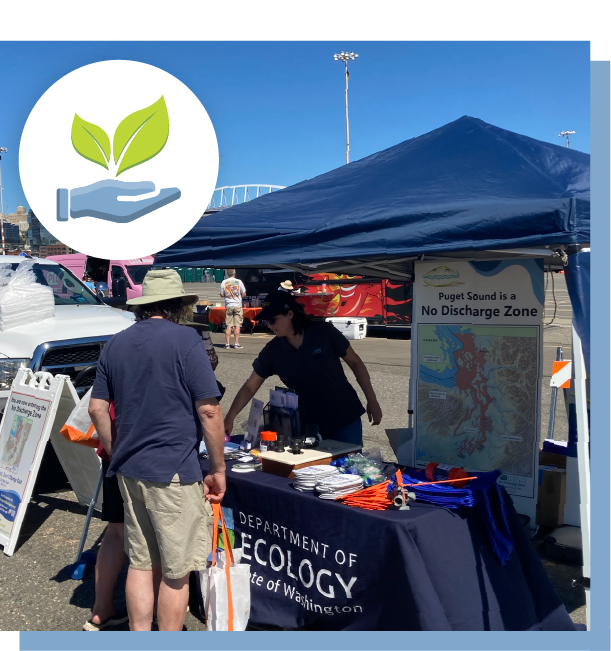
Goal 1: Support and engage our communities, customers, and employees
Goal 1 guides our policies, programs, workplace, relationships, and interactions to implement our vision and mission. Our leadership commits to creating a culture where we respect and include our workforce and those affected by our work.
Learn more about our Goal 1 objectives
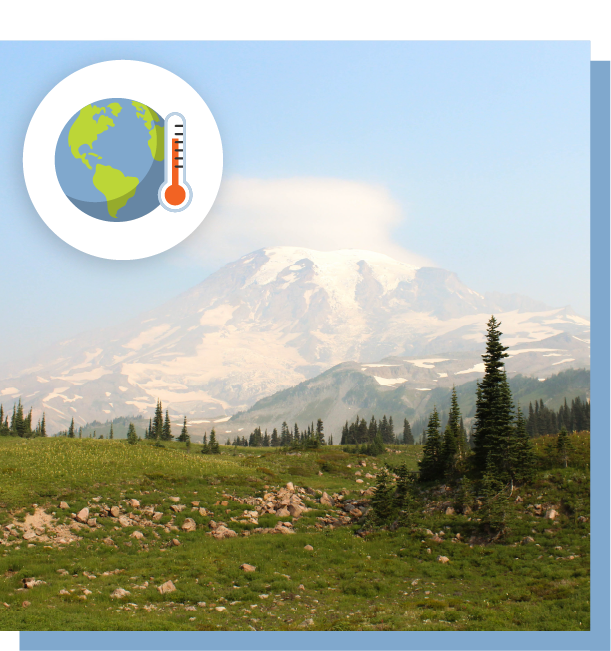
Goal 2: Reduce and prepare for climate impacts
Ecology prepares for the future by understanding, planning for, and reducing the effects of climate change on our communities, environment, and economy. We prioritize reducing greenhouse gas emissions with the long-term goal of eliminating use of fossil fuels and achieving our legal requirement to reach net zero greenhouse gas emissions by 2050.
We also focus on addressing climate change impacts including wildfire, drought, flooding, increased temperatures, and ocean acidification. We prevent and remediate negative effects of climate change while supporting a strong and clean economy, with an emphasis on addressing environmental and health disparities for vulnerable populations and overburdened communities.
Learn more about our Goal 2 objectives
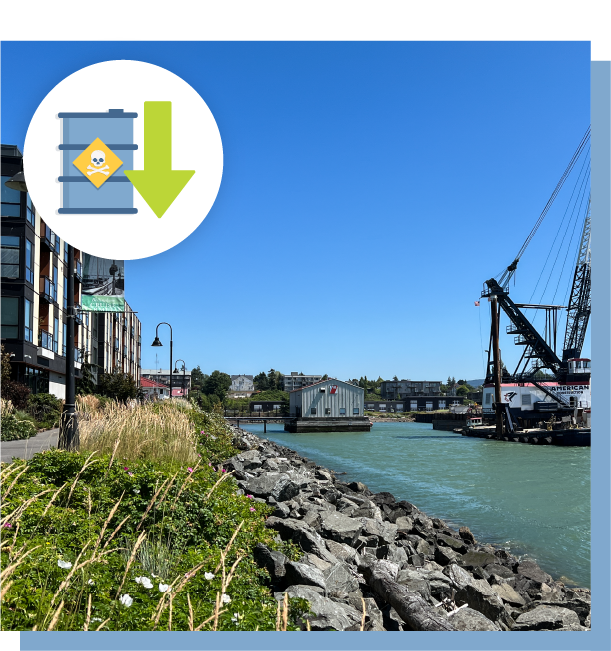
Goal 3: Prevent and reduce waste, toxic threats, and pollution
Our consumer product and producer-responsibility programs address toxic chemicals and pollution during product design, manufacturing, recycling or waste management. We aim to reduce toxic chemical use and waste generation through regulation, technical assistance, and incentives. Our regulatory policies reduce air, land, and water pollution, and provide vital information to communities and first responders about local toxic risks. Our compliance and cleanup programs hold polluters accountable, reduce risks, and support safely remediating or removing contamination from spills, toxic chemicals, or waste materials released into the environment.
Learn more about our Goal 3 objectives
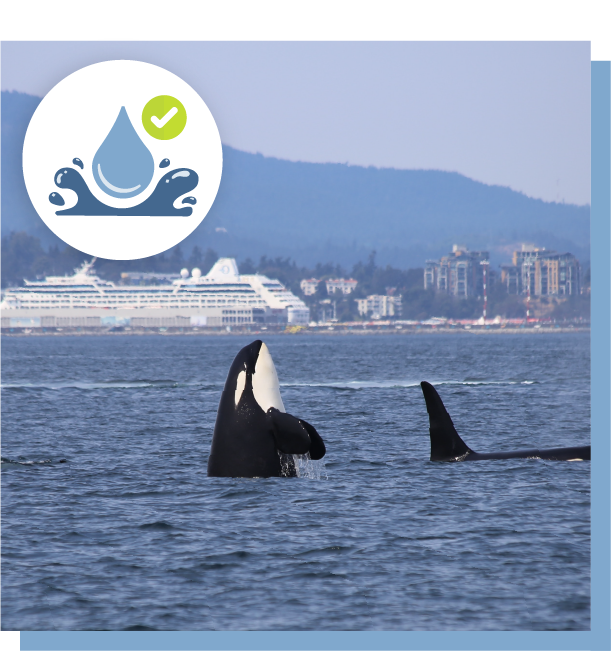
Goal 4: Protect and manage our state's waters
Climate change and our state’s growing population present increasing challenges in water quantity, quality, and access. We promote climate resiliency and ensure high-quality water resources for people, aquatic species, and ecological systems. We conduct research, gather and assess data, and make investments to restore, protect, and enhance our state’s waters now and for future generations.
Learn more about our Goal 4 objectives
Contact information
Bari Schreiner
Rules and Accountability Manager
bari.schreiner@ecy.wa.gov
360-480-1106