




Green chemistry
What is green chemistry? Watch this 2-minute video.
Applying the principles of green chemistry can:
- Prevent pollution at the source by making safer chemicals.
- Reduce or eliminate the use of toxic chemicals—which protects workers, consumers, and the environment.
- Reduce energy and material use while increasing the use of renewable materials.
Learn more about how teachers, students, researchers, and businesses can integrate green chemistry into their classrooms, careers, or products.
What are the 12 principles of green chemistry?
The 12 principles of green chemistry outline goals for chemists and manufacturers to consider when creating new chemicals or processes. Each of the principles can be grouped into one of three themes:
What are examples of green chemistry?
Green chemistry has been used in a wide variety of products and processes, from the medical field to computer technology to household paint and more. Here are a few examples:
- Renewable packing peanuts made from plant starch.
- Non-chemical thermal receipt paper that avoids toxic bisphenol inks.
- Lithium-ion battery alternatives that use less chemicals.
- Sustainable aviation fuel that reduces greenhouse gas emissions.
See more examples of green chemistry or past EPA Green Chemistry award winners.
Green chemistry and sustainable design

Sustainable design is when scientists and engineers use innovative and creative ways to reduce waste, conserve energy, and replace hazardous chemicals with safer alternatives. Green chemistry is part of sustainable design.
These resources can help you create more sustainable products and processes:
- 6 R's of Sustainable Design poster: Rethink, refuse, reduce, reuse, repair, and recycle
- Design Principles Booklet, developed by the American Chemical Society
- Biomimicry and Sustainable Design poster
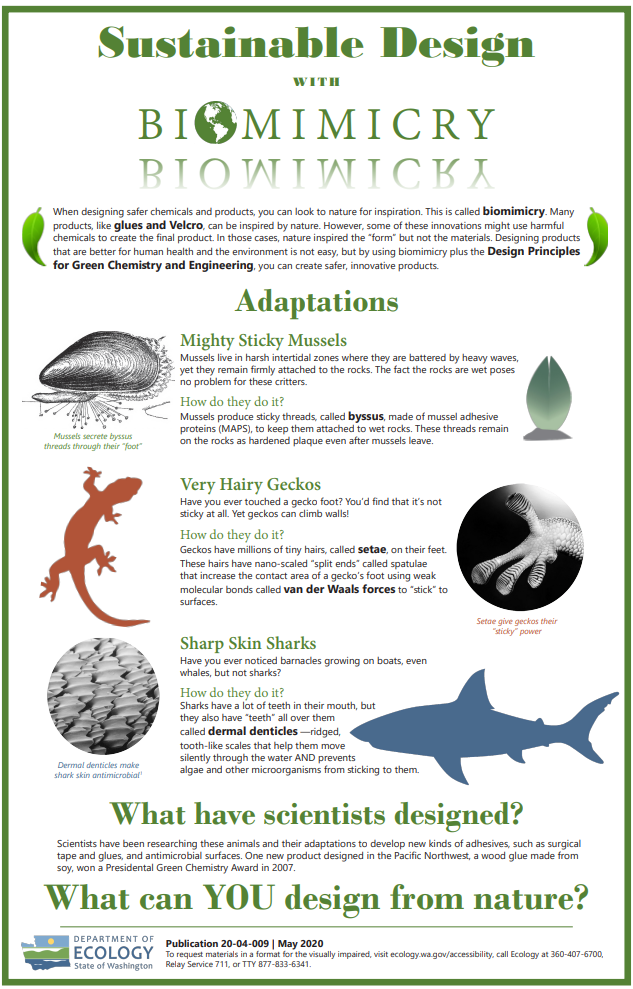
What's biomimicry?
Biomimicry is the study of nature to create new innovations that attempt to "mimic" naturally-occurring processes and therefore inform or create sustainable designs. For example:
- Safer adhesives based on mussels and how they attach to wet rocks.
- High-performance fiber based on spider silk that’s also biodegradable.
- Non-toxic pigment based on beetles that’s environmentally responsible.
Learn more about biomimicry at Learn Biomimicry or the Biomimicry Institute.
Frequently asked questions
Related links
Contact information
Safer Chemicals Team
safer.chem@ecy.wa.gov