


Oil transportation data and studies
Every year, 20 billion gallons of oil moves through Washington by vessel, rail, and pipeline, posing significant risk of environmental damage. The risks associated with all modes of oil transportation and handling require a robust state program of prevention, preparedness, and response in order to protect our communities, environment, and economy.
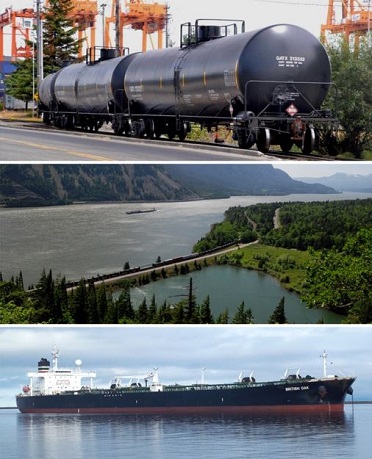
Washington cares about oil transportation safety
We have reached significant milestones since the 2005 Legislature directed us to set a zero-spills goal. Washington has one of the lowest spill rates in the nation, according to U.S. Coast Guard data.
Since 2015, the Legislature passed the Oil Transportation Safety Act and other legislation to help protect Washington from the risks associated with transporting oil.
Learn more about oil transportation in Washington
- Spills maps – Interactive maps and data of spills, oil transportation, and spill planning.
- Publications – Reports, focus sheets, and visuals related to oil transportation.
- Spills Program email list – Stay up-to-date on oil transportation in Washington.
- Crude oil movement quarterly reports – Summary data on crude oil transported by rail, pipeline, and vessel.
Related links
Contact information
Jase Brooks
Acting Statewide Resources Section Manager
Jase.Brooks@ecy.wa.gov
360-951-9490