



PCB light replacement in schools

comment icon

Want to participate?

Public, private, and Tribal K-12 schools, and early learning or daycare centers that are single-use operations and located in Washington are eligible to apply. Email Kimi Matsushima or call 509-413-8719 to discuss your interest and next steps. Please be prepared to share how many lights you think may need to be replaced. If you are unsure, we may be able to help.

NOTE: Do not perform any replacement work until we have confirmed your eligibility.

The PCB light replacement program helps schools and daycare centers in Washington cover the cost of replacing lights that contain polychlorinated biphenyls (PCBs), which are toxic to human health and the environment. PCBs were commonly used in fluorescent lights between 1950 and 1980. All PCB-containing lights are long past their intended lifespan. This increases the risk that they may leak, smoke, or burn when they fail. Proactive replacement of old PCB-containing lights helps avoid these hazards and costly cleanups.

Eligible participants may receive reimbursement up to $20,000 for costs related to identification, removal, replacement, and proper disposal of intact fluorescent light ballasts that contain PCBs. 

Who is eligible to apply?

Public, private, and Tribal K-12 schools, and early learning or daycare centers that are single-use operations and located in Washington may apply to the program.

How do you apply and what to expect?

To apply for the program:

  • Contact Kimi Matsushima at 509-413-8719 or kimi.matsushima@ecy.wa.gov to discuss your interest in the program.
  • After this initial consultation, we’ll send you an application.
  • Complete the application, which includes providing a project plan with cost estimates.

Once your application is approved, you must:

  • Begin work within 90 days.
  • Submit a voucher with receipts for reimbursement (once work is completed).

How do you know if there are PCBs in your lights?

PCB-containing lights are likely present if your school or facility:

  • Was built or renovated before 1980.
  • Has NOT had a complete lighting upgrade.
  • Has older magnetic ballasts or T12 lamps.

How to identify PCB-containing lights

PCB-containing light ballast

Example of a typical pre-1979 PCB-containing fluorescent light ballast
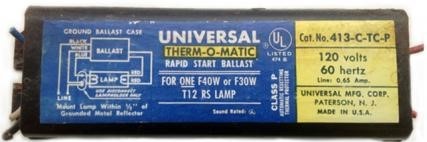
The part that may contain PCBs is called the ballast. It’s a rectangular box in a light fixture that regulates the flow of electricity. PCB-containing magnetic ballasts were commonly used in fluorescent light fixtures that hold T12 lamps. In this case, the "T" means tubular while the "12" indicates a 12/8-inch (1.5-inch) diameter.

For more information, read:

Need more help?

If you are unsure when your lights were installed or don’t have the capacity to identify them, we may be able to help. Email Kimi Matsushima or call 509-413-8719.

Why are PCB-containing lights dangerous?

Any amounts of PCBs can be harmful to your health and the environment. PCB-containing lights release low levels of PCBs into the air, building up in dust, and the environment — in this case, schools. PCBs have toxic effects on the immune, reproductive, nervous, and endocrine systems in people and other organisms. They cause cancer in animals and are likely to cause cancer in people.

Does Ecology provide additional funding to high-needs schools?

Across our state, environmental pollution and other harms impact some people and communities more heavily than others. At the Department of Ecology, we consider environmental justice integral to fulfill our mission to protect the environment for all Washingtonians. This work is based on guidelines in the Healthy Environmental for All Act (RCW 70A.02) and include being located in an overburdened community or serving vulnerable populations. We invite applicants to notify us during the initial consultation if additional funds are needed to participate in this program.

Frequently asked questions