

Official websites use .gov A
.gov website belongs to an official government
organization in the United States.
Secure .gov websites use HTTPS A
lock (
) or https:// means you’ve safely connected to
the .gov website. Share sensitive information only on official,
secure websites.
We protect and restore Puget Sound through a wide variety of programs and activities. Much of our work supports Washington's Puget Sound Action Agenda, a framework that involves several state agencies and other parties.
What we do to protect Puget Sound
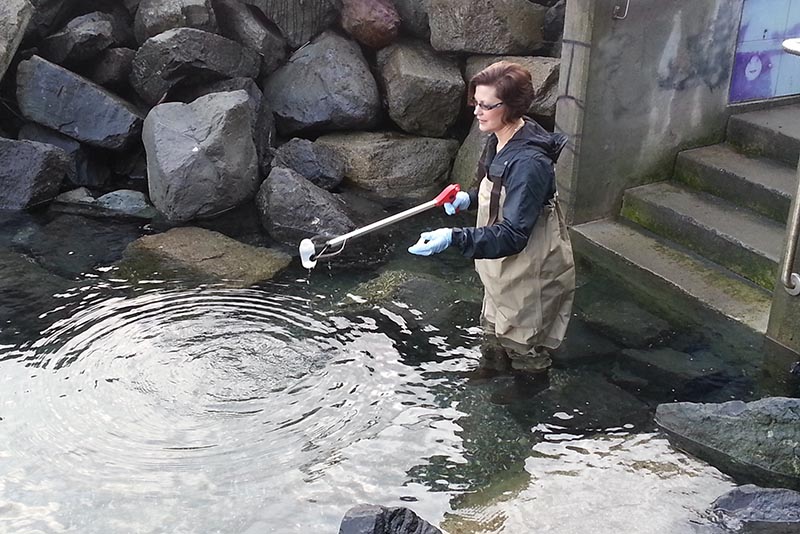
A scientist collecting water samples for testing.
Water quality standards - These provide the basis for protecting and regulating the quality of all surface waters in Washington. They address designated uses, water quality criteria and protecting waters from future pollution.
Stormwater programs - We're working to reduce polluted runoff from streets, forests, and farms.
Reducing nutrients - We're developing a plan to reduce nutrients that harm Puget Sound water quality by lowering dissolved oxygen.
Oil spill prevention - We work to ensure safe handling and transport of crude and refined oil. It is far less expensive to prevent an oil spill than to clean one up.
Grants and loans - State and federal funds support projects and programs by state, local and tribal governments that protect and restore Puget Sound.
Combined sewer overflows - We're working with communities that have combined sanitary and storm sewers to prevent overflows of wastewater that contains untreated sewage.
Cruise ship agreement - Large cruise ships that visit Washington help protect our marine waters under a formal memorandum of understanding.
No discharge zone - We have established Puget Sound and certain adjoining waters as areas where boats may not release sewage, whether treated or not.
Coastal zone management - We administer Washington's Coastal Zone Management Program, which meets broader national interests of protecting, restoring, and responsibly developing the coast, including Puget Sound.
Wetlands - We provide resources for regulatory and non-regulatory approaches to protecting wetlands.
Water quality improvement - These plans and projects help us make sure marine and fresh water resources meet state water quality standards.
Total Maximum Daily Load process - This process – including many Puget Sound area waters – is a science-based approach to cleaning up polluted water so that it meets state water quality standards.
Spill preparedness & response - The lion's share of Puget Sound contains the lion's share of our advance plans and pre-positioned equipment for oil spills. We invest heavily in preparation so that we - and our many partners - are ready and trained to respond.
Reducing toxic chemicals - Much of the pollution that enters our environment comes from toxic chemicals contained in everyday products such as the brakes on our cars, flame retardants in our furniture, softeners in plastics, and metals in roofing materials. We enforce Washington's regulations on toxic chemicals in products, educate the public about these chemicals, and develop policies to reduce or eliminate the use of toxic chemicals whenever possible.
Puget Sound priority cleanups - Among the thousands of cleanup sites in and around Puget Sound, we created teams to focus on cleanup and restoration in and near our highest priority waterways.
Watershed characterization project - We've developed a planning tool for the Puget Sound region that identifies the most important areas to protect and restore, and places most suitable for development.
Shoreline management - We partner with communities and all levels of government to meet state and broader national interests by protecting, restoring, and responsibly developing Puget Sound shorelines.
How you can help save Puget Sound - Use these educational resources to find out what you can do to help restore and protect Puget Sound.
Coastal Atlas - Aerial photos of all our marine and many freshwater shorelines. Plus layers and layers of information about water conditions and uses.
Critter of the Month - Our scientists blog about Puget Sound's remarkable benthic (sediment-dwelling) animals.
BEACH program - We monitor the safety of saltwater swimming beaches from Memorial Day to Labor Day, in cooperation with the state Department of Health and local agencies.
Preventing erosion - We provide expert guidance so communities can address shoreline erosion in ways that protect safety, property and healthy beach habitats.
Puget Sound landslides - Knowing about potential Puget Sound landslide risks can keep you safe and your home standing.
Protecting instream flows - Helping streams maintain healthy flows helps protect salmon and other Puget Sound species that rely on healthy streams and estuaries.
Assessment of state waters - We review water quality data to understand how clean Puget Sound area and statewide rivers, lakes, and marine waters are.
Saltwater studies - We conduct water and sediment studies to help identify how marine life responds to change over time.
Salish Sea Modeling - We use a computer tool that simulates hydrodynamic and water quality processes in Puget Sound and the rest of the Salish Sea.
Nitrogen & dissolved oxygen - Nitrogen reduces dissolved oxygen levels in Puget Sound. We study nitrogen's many sources, its effects, and tools to help develop strategies to reduce this pollutant.
Puget Sound Toxics studies - We study toxic pollutants - from materials people use in everyday activities - that can harm human health and the environment, their effects on the Sound and ways to eliminate or reduce their use or lessen their impacts. .
Toxics monitoring - We conduct long-term monitoring to understand levels and trends of toxics in the environment.
Eyes over Puget Sound - We use aerial photos and data from our monitoring stations and ferries to report on Puget Sound.
Padilla Bay Reserve - We manage this National Estuarine Research Reserve, which provides research and stewardship opportunities, as well as educational classes and professional trainings on a variety of environmental topics.
River & stream monitoring - We gather data on the waters that flow to Puget Sound to help assure clean and abundant water to support human and aquatic life.